
New York Bench Warrants
New York bench warrants are court orders that come from judges when a person fails to show up for a scheduled court date or does not follow the terms set by the court. You can search for bench warrant records across all 62 New York counties through the state court system and local sheriff offices. The NYS Office of Court Administration runs the Criminal History Record Search system, which covers criminal case data from County, Supreme, City, Town, and Village courts statewide. Each county also keeps its own warrant files at the sheriff's office and the county clerk. If you need to check on a case or find out if a bench warrant has been filed, this guide walks you through the steps for every part of the state.
New York Bench Warrants Overview
Where to Find New York Bench Warrants
Bench warrants in New York are kept by the court that issued them. Each of the 62 counties has its own court system. The County Court handles felony bench warrants. City Courts, Town Courts, and Village Courts deal with misdemeanor bench warrants and violations. The judge who set your court date is the one who signs the bench warrant if you miss it. That court holds the record.
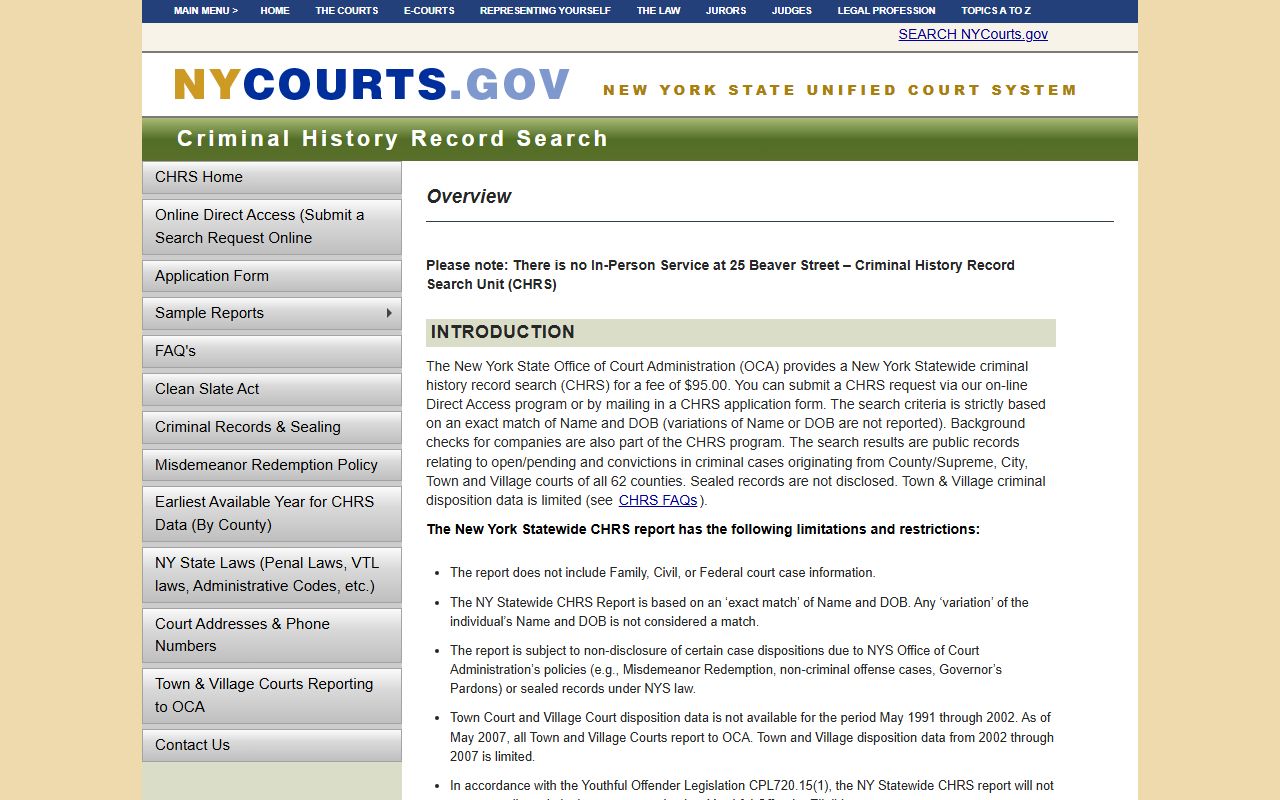
The NYS Office of Court Administration maintains the Criminal History Record Search system as a statewide source for criminal case data. This CHRS system covers open, pending, and conviction cases from courts across New York. It uses a strict exact match search. Both the name and date of birth must be right or the record will not come up. The system costs $95 per name and does not do partial matches or search by alias. You can submit a request through the OCA CHRS portal to look up case records tied to bench warrants in any county.
The screenshot below shows the NYS OCA Criminal History Record Search portal, which is the main statewide tool for looking up criminal case records including bench warrant information.
Keep in mind that active bench warrants are not always posted in public databases. Law enforcement agencies hold this data for safety reasons. Sealed records will not show up in a CHRS search or any public court lookup.
Note: Town and Village court records from 1991 to 2002 have limited availability in the CHRS system, so older bench warrant data from those courts may not appear.
How to Search Bench Warrants in New York
New York gives you a few ways to look up bench warrant records. The best method depends on what you know about the case and how fast you need the information.
The CHRS system is the broadest tool. It pulls data from all 62 counties. A search costs $95 per name. You need the full name and date of birth of the person you want to check. Results come back showing open cases, pending matters, and past convictions. If a bench warrant was issued as part of a criminal case, it may show up here. But the system only works on exact matches. A wrong middle initial or a different spelling will return nothing. Requests go through the OCA website.
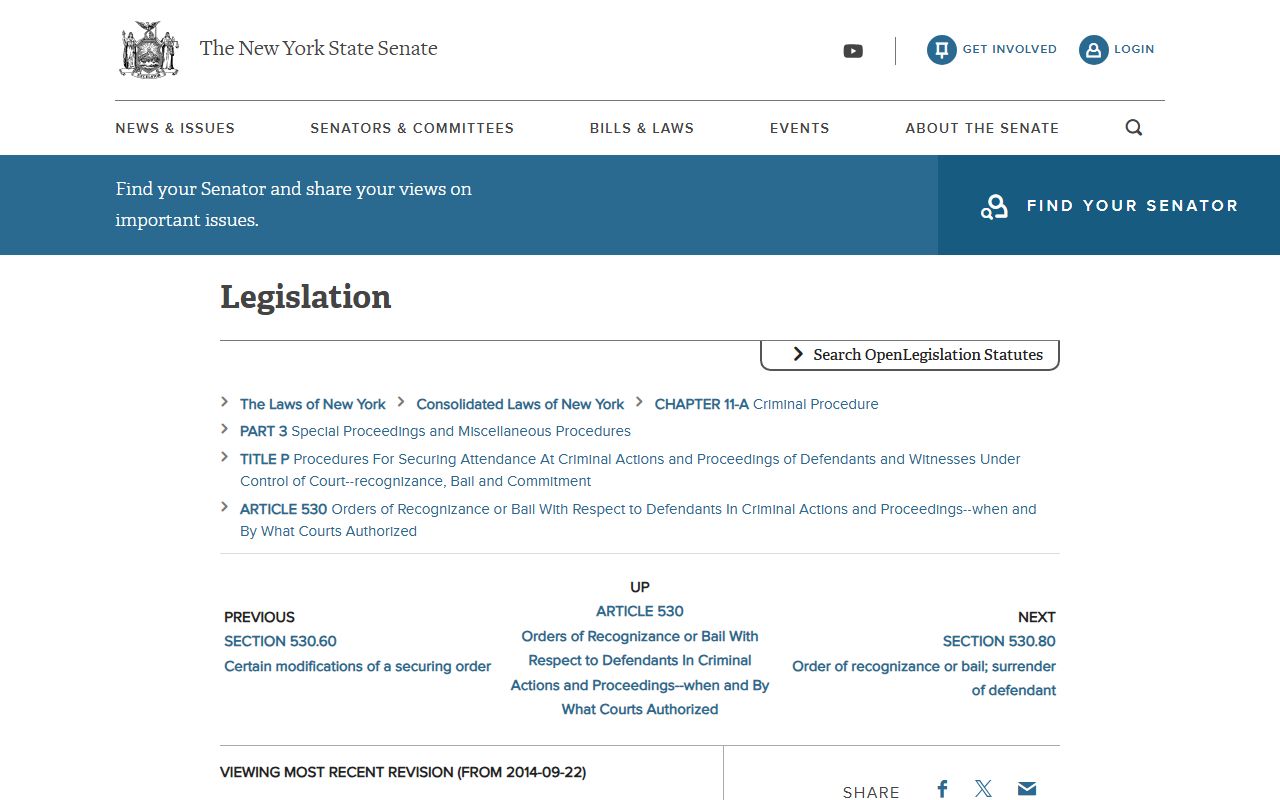
You can also search case records through the CPL Section 530.70, which is the statute that gives New York courts the power to issue bench warrants. This law applies when a person fails to appear after being released on bail, on their own recognizance, or under supervision. Knowing this section can help you understand what you find in court records.
The screenshot below shows the text of CPL 530.70, the New York statute that authorizes courts to issue bench warrants for failure to appear.
For a more direct approach, contact the county sheriff or county clerk in the area where the case was filed. Many sheriff offices have a warrant division that tracks active bench warrants. The county clerk keeps court files that include warrant records as part of the case history.
To search for New York bench warrants, you need:
- Full legal name of the person
- Date of birth for CHRS searches
- County where the case was filed
- Case number if you have it
Types of Bench Warrants in New York
New York courts issue bench warrants for different reasons. The most common one is failure to appear. If a judge set a court date and you did not show up, the court can sign a bench warrant under CPL 530.70. This applies to both misdemeanor and felony cases. The warrant stays active until the person is found or turns themselves in.
Probation violations also lead to bench warrants. If you break the rules of your probation, the probation department files a report with the court. The judge can then issue a bench warrant for your arrest. This brings you back to court to face the violation charges. Bench warrants from felony cases carry more weight. They often mean higher bail or no bail at all when the person is picked up.
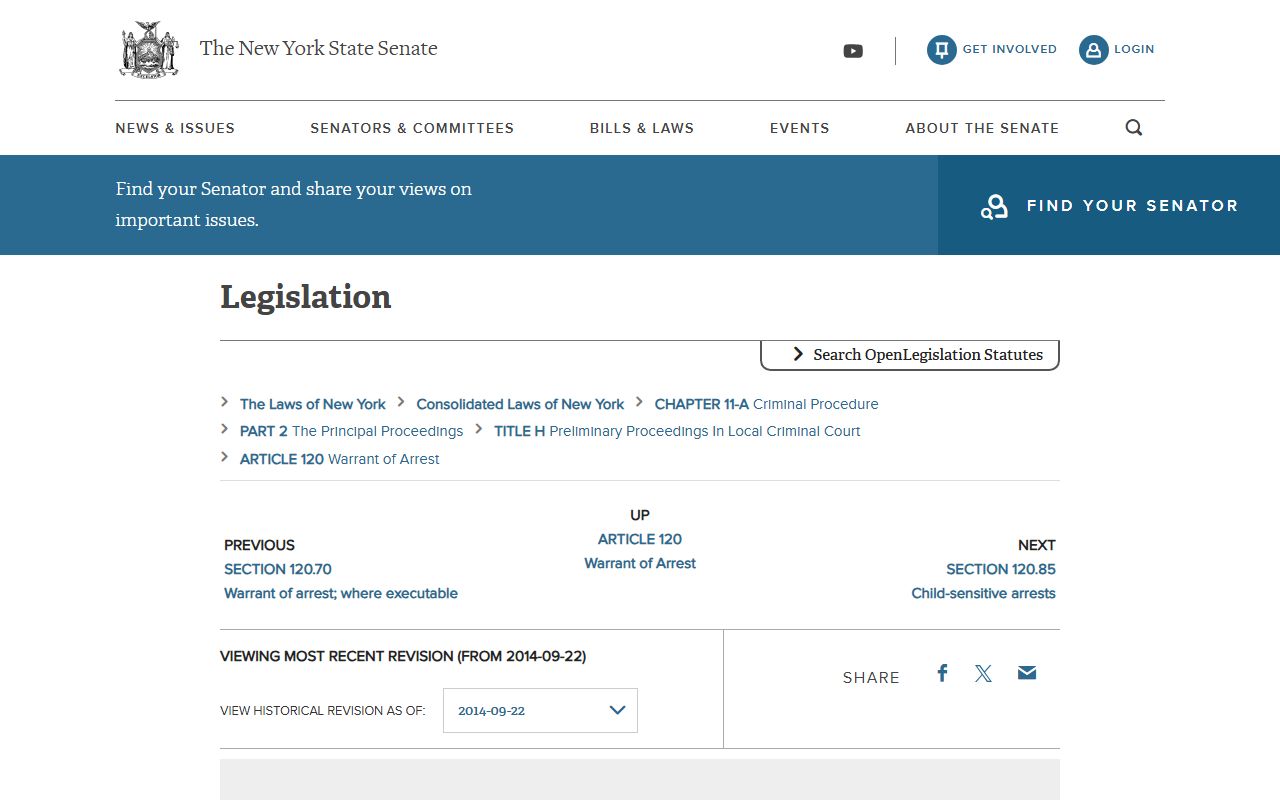
Under CPL Section 120.80, New York law sets rules for how warrants get carried out. This statute covers the time limits and steps that law enforcement must follow when they serve a warrant. The screenshot below shows the text of this law.
Traffic bench warrants are less serious but still common. City Courts and Town Courts issue these when people miss court dates for moving violations or do not pay fines they owe. These warrants can lead to an arrest during a routine traffic stop.
Bench Warrant Records and FOIL in New York
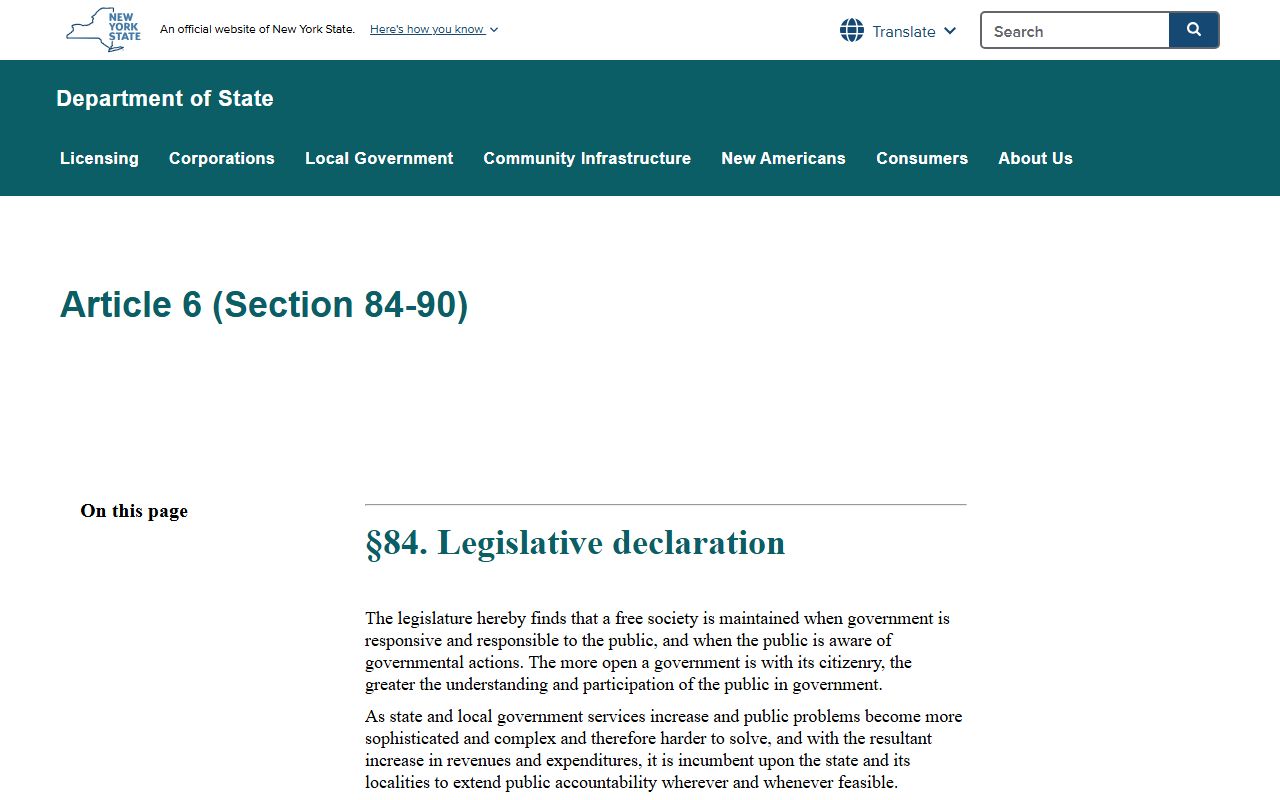
New York's Freedom of Information Law gives the public the right to request government records. This includes some warrant records held by law enforcement agencies and courts. FOIL is covered under Public Officers Law Article 6. You can file a written request with any agency that holds the records you want.
The process is simple. Write a letter or fill out a FOIL request form. Send it to the Records Access Officer at the agency. They have 5 business days to respond to your initial request. Complex requests can take up to 20 business days. The NYS Department of State FOIL page has full details on how to make a request and what to expect.
The screenshot below shows the NYS FOIL information page, which outlines the process for requesting public records including bench warrant data from government agencies.
Not all bench warrant records are available through FOIL. Active warrants may be exempt if releasing the information would put someone at risk or interfere with law enforcement. Sealed records are also off limits. The Clean Slate Act, which took effect on November 16, 2024, allows for automatic sealing of eligible criminal records after set time periods. This means some older bench warrant records may no longer be accessible.
Note: Certificates of Disposition must be obtained from the specific court where the case was heard, not through a statewide search or FOIL request.
New York City Bench Warrants
New York City has its own court system for bench warrants. The NYC Criminal Court handles misdemeanor cases and violations across all five boroughs. Each borough runs an arraignment court 24 hours a day, 7 days a week. If you get picked up on a bench warrant in the city, you go to arraignment in the borough where the warrant was issued.
The court locations are: Manhattan at 100 Centre Street, Brooklyn at 120 Schermerhorn Street, Queens at 125-01 Queens Boulevard, Bronx at 215 East 161st Street, and Staten Island at 26 Central Avenue. The NYPD has its own warrant squad that tracks and picks up people with bench warrants across the city. NYC residents can also call 311 or check the NYC 311 warrant information page for general guidance on warrants.
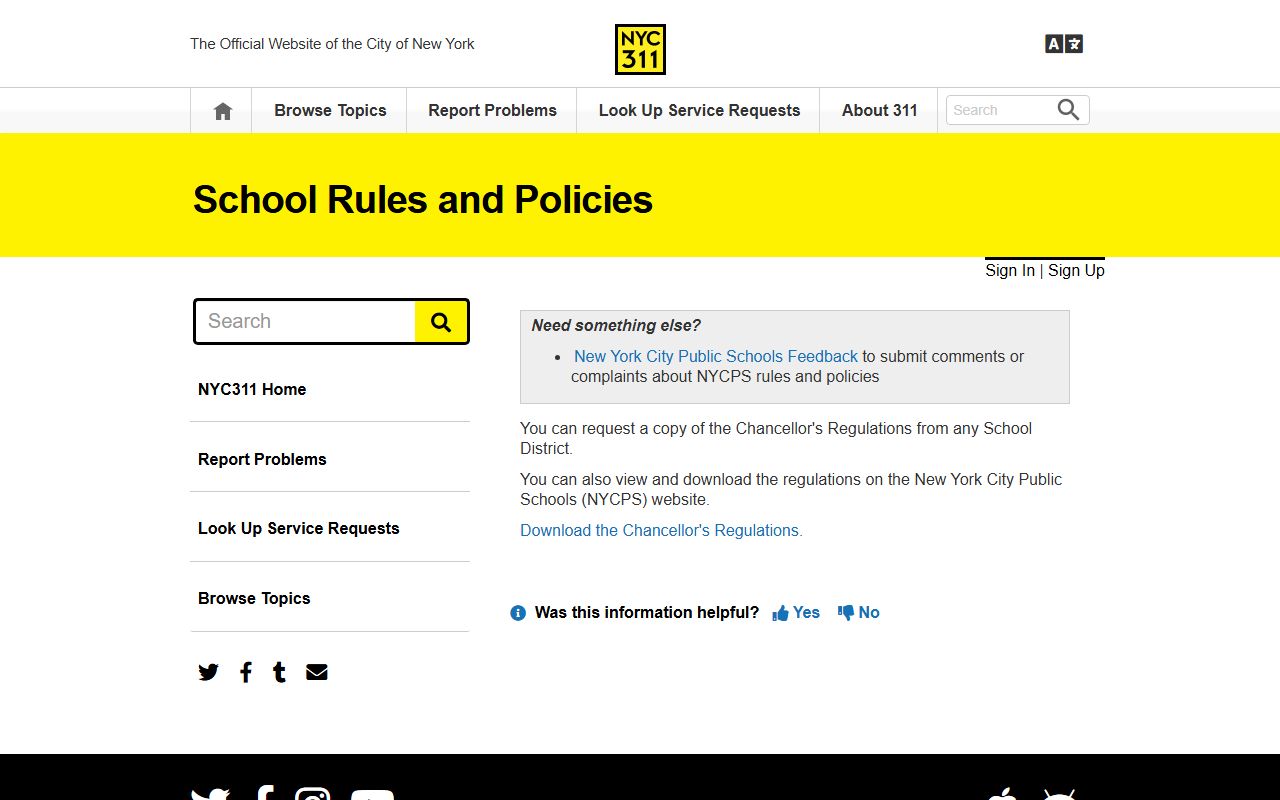
Below is a screenshot of the NYC 311 warrant information page, which provides guidance for city residents on how to check for and resolve bench warrants.
Voluntary surrender is a real option. If you know you have a bench warrant, you can contact the court clerk or work with a lawyer to set up a time to turn yourself in. This often leads to better bail terms than if the police pick you up on the street. The Legal Aid Society, Bronx Defenders, Brooklyn Defender Services, and Queens Defenders all provide free legal help for people who qualify.
How to Resolve a Bench Warrant in New York
The best way to deal with a bench warrant is to take care of it before law enforcement finds you. Contact the court that issued the warrant. The court clerk can tell you what you need to do. In most cases, this means showing up for a new court date. Some courts let you call and reschedule. Others need you to appear in person.
Getting a lawyer helps. An attorney can sometimes appear on your behalf or go with you to court. The New York State Bar Association lawyer referral service can connect you with an attorney in your area. For people who cannot pay for a lawyer, the Public Defender's Office in each county provides free representation for those who qualify based on income.
If you show up on your own, the judge will decide what happens next. They might set new bail, release you on your own recognizance, or move your case forward. The outcome depends on the type of case, why you missed court, and your record. Bench warrants do not go away on their own. They stay active until someone acts on them.
Browse New York Bench Warrants by County
Each of New York's 62 counties has its own court system and sheriff's office that handles bench warrants. Pick a county below to find local contact info and resources for bench warrant records in that area.
Bench Warrants in Major New York Cities
Residents of major cities deal with bench warrants through their local courts and the county court system. Pick a city below to find out where to go for bench warrant records in that area.