
Oswego County Bench Warrants
Oswego County bench warrants are issued by courts across this Central New York county, with the county seat in the city of Oswego along Lake Ontario. The Sheriff's Office handles warrant service and maintains its own website where residents can find contact information for warrant-related matters. If you are looking up a bench warrant in Oswego County, the Sheriff and local courts are the primary points of contact. This page covers the offices, search tools, and legal details you need to know about bench warrants in Oswego County.
Oswego County Overview
Oswego County Sheriff's Office
The Oswego County Sheriff's Office is the lead agency for serving bench warrants in the county. Deputies carry out warrants issued by County Court, Supreme Court, and local town and village justice courts throughout Oswego County. The Sheriff's Office also runs the county jail where people brought in on warrants are held until they can appear before a judge.
When a bench warrant is issued in Oswego County, the Sheriff's Office enters it into the statewide law enforcement database. Any police officer in New York can see the warrant if they run a check. The Fulton and Oswego city police departments also serve warrants within their jurisdictions. All of these agencies coordinate through the same database, so there is no gap in coverage regardless of where the person is found within the county.
The image below shows the Oswego County Sheriff's Office website, which provides contact details for warrant-related inquiries.
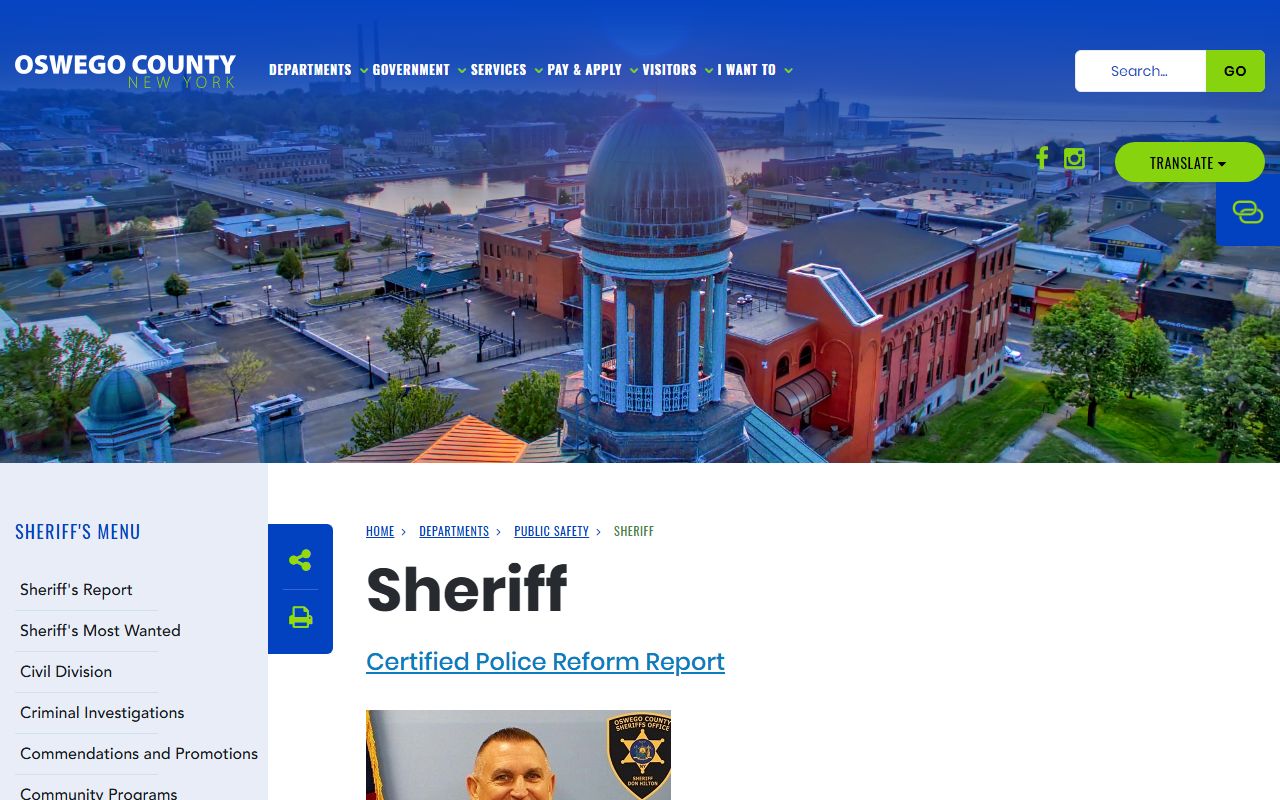
You can contact the Sheriff's Office by phone to ask about an active bench warrant. Call during regular business hours. The staff may be able to confirm whether a warrant exists for a specific person, but they might not share all the details. If you want to surrender on a warrant, the Sheriff's Office can explain the process and what to expect when you come in.
Note: All bench warrants in Oswego County are entered into the state database, meaning they can result in arrest anywhere in New York.
How to Look Up Oswego County Warrants
Oswego County does not have its own public warrant database. To search for warrant records, you need to use state-level tools or contact local agencies directly. The NYS OCA Criminal History Record Search covers all counties in New York State. It costs $95 per name and matches on exact name and date of birth. Results include open cases and convictions from criminal courts throughout the state.
Open cases in the OCA system often indicate that bench warrants are outstanding. When someone misses a court date, the case stays open and the court issues a bench warrant. So while the OCA search is not a direct warrant lookup, it can show you cases that likely have warrants tied to them.
A FOIL request can also get you warrant information from Oswego County agencies. Under the Freedom of Information Law, you can request government records in writing. Submit the request to the Sheriff's Office and they have five business days to respond or let you know when they will respond. Some details may be withheld for law enforcement reasons, but basic warrant information is generally available.
For local court records, contact the Oswego County Clerk or the individual court where the case was filed. Town courts in Oswego County each keep their own records, and the court clerk can tell you if there is an active bench warrant on a case. The Fulton City Court and Oswego City Court are the two largest city courts in the county.
Bench Warrant Laws in Oswego County
Bench warrants in Oswego County follow New York State criminal procedure. Under CPL 530.70, a judge can issue a bench warrant when a defendant fails to appear for a required court proceeding. This covers all types of criminal cases, from traffic matters to felonies. The warrant gives law enforcement the legal authority to arrest the person and bring them before the court.
The rules for executing warrants are found in CPL 120.80. This section covers how officers must handle the arrest, including the procedures they follow during and after taking someone into custody. In Oswego County, both the Sheriff and local police serve bench warrants. They can make the arrest at any location, at any time of day.
Bench warrants in New York never expire. A warrant from last month and one from ten years ago carry the same weight. The court does not drop the case just because time has passed. The warrant stays active in the system until the person is brought before a judge. This is true for warrants from every court in Oswego County, whether it is County Court in Oswego or a town justice court in a smaller community.
Clearing Oswego County Bench Warrants
If you have a bench warrant in Oswego County, the smartest thing you can do is take care of it yourself before the police find you. Hire a lawyer and make arrangements to go to court voluntarily. Your attorney can contact the court and the DA's office to find out what the case involves and what to expect.
You can also walk into the courthouse in Oswego and tell the clerk you want to resolve a bench warrant. The court will schedule you to see a judge. Whether you are released, held on bail, or released on your own recognizance depends on the charges and your history. Having a lawyer with you gives you the best shot at a good outcome.
- Call the Sheriff's Office to ask about the warrant details
- Find a lawyer through the New York State Bar Association
- Go to the Oswego County Courthouse during business hours
- Bring valid ID and any court documents from the case
- The court will appoint counsel if you cannot afford a lawyer
Legal aid organizations in Central New York serve Oswego County residents who need free legal help. These groups can represent you in court or at least give you advice on how to handle the warrant. Waiting is never the right call. The warrant will not go away, and the risks of an unexpected arrest grow with each passing day.
Nearby Counties
Oswego County borders several counties in Central and Northern New York. If your warrant was issued in a neighboring county, you need to contact that county's court system.